LATEST ARTICLES

China’s Empire of Engineers

China’s Empire of Engineers

Latest results show China surpassing US in research and academic status

By Robert Ubell
March 5, 2026

Improbably, in my lifetime, China has catapulted itself from a grueling peasant economy nearly a century ago to challenging and even superseding U.S. science and academic status. At first, it seems totally stupefying, but when you discover that over the last decades, China’s transformation has been led by a series of determined engineers at the helm of the country aiming to beat U.S. dominance, it’s not hard to appreciate how it happened.

A number of weeks ago, The Times reported a startling result in global academic pecking order. [https://www.nytimes.com/2026/01/15/us/harvard-global-ranking-chinese-universities-trump-cuts.html]. Until recently, Harvard ranked as the most productive research university in the world but, now, in a top global site, astonishingly, it dropped to No. 3. “The schools racing up the list are not Harvard’s American peers,” noted The Times. “But Chinese universities that have been steadily climbing in rankings that emphasize the volume and quality of research they produce.”

After decades running far behind the U.S., China has emerged as the world’s leading producer of science and engineering research papers, having surpassed the U.S. several years ago. Today, Chinese research represents a quarter of the world’s technical literature, with China overtaking the U.S. in delivering the most highly cited papers. [https://www.nature.com/articles/d41586-023-01705-7#:~:text=19%20May%202023-,China%20overtakes%20United%20States%20on%20contribution%20to%20research%20in%20Nature,By].

Some say that China’s rise is a result of communist fanatical rule and our retreat a consequence of late capitalism decline. But what really distinguishes the U.S. from China is a key difference in where the leaders of the two countries earned their professional degrees. Over the last several decades, China has been ruled by fiercely ambitious engineers; the U.S., mostly by lawyers who litigated America’s triumphs away

Following the chaos in the Mao years, Deng Xiaoping promoted engineers to China’s top government officials. By 2002, all nine members of the Party’s leadership in the Politburo Standing Committee had trained as engineers. General Secretary Hu Jintao studied hydraulic engineering and Xi Jinping chemical engineering. In his third term as general secretary, Xi filled the Politburo with senior staff drawn from the country’s aerospace and weapons ministries [https://wwnorton.com/books/breakneck].

Chinese leaders have been taking the country on a high-speed track over the years to win the global higher ed and research race. China has moved higher education and research ahead in a relentless global talent recruitment campaign with massive state investment, encouraging publication in high-impact publications, focusing especially on emerging strategic sectors.

An estimated three million students from China have studied in the United States since the late 1970s, representing one of the largest flows of foreign students anywhere in modern times [https://uscet.org/uscet-releases-three-decades-of-chinese-students-in-america-1991-2021/#]. And for many of them, America has been a golden land of opportunity, especially for remarkable Chinese who have captured top posts at U.S. high-tech companies. In an uncanny switch, China sent off its kids to top colleges in America to learn how to do technology and capitalism. Instead of coming home to impart lessons learned, many stayed here. And some really made it big. Jensen Huang, a Chinese CEO runs NVIDIA, the AI chip leader, the darling of Wall Street, with its stock having soared a thousand percent over the past three years [https://www.fool.com/investing/2026/01/26/prediction-nvidia-will-reach-this-price/?msockid=36606bad962c6f0616b367c497a46ed].Today, Chinese CEOs run other tech goldrush companies–AMD, Broadcom, and Vizio, among dozens of others.

In what China watchers are calling a reverse brain drain, thousands of scholars, academics, entrepreneurs and scientists have been returning home after decades of success in America. It’s part of an intensive global talent recruitment strategy, luring notable scientists to assume key spots in prestigious Chinese institutions. [https://moderndiplomacy.eu/2026/01/31/reverse-brain-drain-how-china-is-recruiting-the-worlds-talents]. Focusing on advanced technologies, artificial intelligence and breakthrough science, China offers recruits generous financial packages with unusually high salaries, housing and travel allowances, plus research funding, often in millions of yuan. Some recruits even earn a starter bonus, running to about a million yuan. Late last year, China introduced special visas for early career professionals, easing entry for young science and technology talent, allowing them to live, work, and conduct research in China without employer sponsorship or an invitation from a local university. https://www.nature.com/articles/d41586-025-02336-w].

For China, these programs have certainly paid off. One recent study showed scholars with overseas experience published more papers with higher impact than their Chinese stay-at-home peers. Observers say returnees have fostered a positive influence on China’s research, contributing to its global competitiveness. Many now hold top posts in universities and government agencies.

Among the most notable “sea turtles” are Shing-Tung Yau, a Fields Medal mathematician, who taught at Stanford, Princeton, and Harvard before moving toTsinghua University, and Andrew Yao, a Turing Award computer scientist, who left Princeton to establish the Institute for Interdisciplinary Information Sciences, also at Tsinghua, China’s premier science amd technology university [https://www.yicaiglobal.com/news/china-will-become-global-math-leader-in-next-decade-first-chinese-fields-medal-winner-says]. Others are Song-Chun Zhu, a prominent AI researcher who left UCLA to become founding director at the Beijing Institute for General Artificial Intelligence at Peking University, and Chen Zhoufeng, a leading neuroscientist, who departed Washington University School of Medicine to join Shenzhen Bay Laboratory at Shenzhen Bay Science Park, China’s largest tech innovation center.

Meanwhile, President Trump is taking a chainsaw to American science and technology, with deep gashes at NSF, NIH, NASA, and other world-class agencies. In a cascade of massive cuts to federal scientific and medical research. [https://www.whitehouse.gov/omb/information-resources/budget/the-presidents-fy-2026-discretionary-budget-request/]. In next year’s federal budget, the National Institutes of Health will be down from nearly $32 billion to $26 billion and the Centers for Disease Control and Prevention will lose $1.2 billion. Both the National Science Foundation and NASA will be slashed in half.

But while Trump cuts funding for science and technology, the comparative decline of support in the U.S. vs. China has been in a long-term decline. With Trump in office merely a year into his second presidency, he has not been responsible for our relative long-term slippage over the last years compared with China. Trump is just making things worse.

As the U.S. cuts, China spends. A new OECD report [https://www.universityworldnews.com/post.php?story=20250404133241546] reveals that China’s gross domestic expenditure on R&D is $780 billion, slightly behind the U.S. at almost $825 billion. At 8.7 percent annual growth, China’s R&D spending is the fastest in the world, far outpacing the U.S. and soon on its way to outspending us.

With America at the top of science, technology and medical research since the end of the Second World War, having produced by far the most Nobel laureates of any nation [https://www.sciencedirect.com/science/article/pii/S0048733324001999], having gained sensational technical and clinical achievements that have totally altered modern life, it’s astonishing that Trump is smashing a formidable research engine that made these brilliant accomplishments possible. It confounds scientists, engineers, physicians and so many of the rest of us who depend on recent American innovations in our daily lives—the Internet, cell phones, Covid shots—why, suddenly, it’s being trashed.

In comparison, China is no slouch. Over the last 50 years, China has achieved world-class status in key technologies, most notably in quantum computing, satellite systems, plant genomics, high-speed rail, fourth-generation nuclear power, EV batteries, and most notably in today’s race to the top, AI and deep learning. Summing up China’s technical power, The Economist concludes, “The old science world order, dominated by America, Europe and Japan, is coming to an end” [https://www.economist.com/science-and-technology/2024/06/12/china-has-become-a-scientific-superpower].

In his new book, Breakneck: China’s Quest to Engineer the Future [https://wwnorton.com/books/breakneck], Dan Wang, a research fellow at Stanford and a former analyst at Gavekal Dragonomics in Beijing and Hong Kong, looking at the role of engineers in China among its leaders, sums things up this way:

“Over the past four decades, China has grown richer, more technologically capable, and more diplomatically assertive abroad. China learned so well from the United States that it started to beat America at its own game: capitalism, industry, and harnessing its people’s relentless ambition.”

But rapid growth has come at a cost. China’s rise has greatly accelerated deadly emissions. Over the past ten years, China has spewed more greenhouse gases per year than any other country, surpassing the U.S. as the top discharger early in this century [https://www.cfr.org/backgrounders/china-climate-change-policies-environmental-degradation]. Rapid industrialization and mass movements to cities has had other social and environmental consequences, especially from the mammoth Three Gorges Dam at the turn of this century. Convinced of its economic necessity, China’s engineering emperors flooded 13 cities, 140 towns and 1,300 villages, forcing about 1.4 million million people to relocate to new homes and communities downstream. Over its life, it has caused serious soil erosion and vast sedimentation [https://www.scientificamerican.com/article/chinas-three-gorges-dam-disaster/], adverse effects dismissed or denied by China’s technoautocrats.

In a recent opinion column in The Times, a Harvard professor doesn’t buy the story that China is outpacing American science and technology. “Chinese universities are paper tigers,” says Prof. Ariel Procaccia. “They churn out papers at a ferocious pace, but the quality of these publications is too often in question. American universities will remain the front-runners in the race that truly matters — attracting the most brilliant minds — unless our government continues to withdraw the support needed to produce world-leading research.” [https://www.nytimes.com/2026/02/11/opinion/america-china-universities-rankings.htm].

Navigating Higher Ed’s Digital Shift as a Technophobe

Published on Jan 6, 2026

I’m at my desk this morning in my study in my Chelsea apartment, drafting a piece on my feelings of technical inadequacy. It’s among my first attempts to get my story underway, even though I’ve been suffering from computer troubles most of my career.

I click on my handsome all-in-one computer but worry immediately when the screen remains dark, failing to light up as expected in milliseconds. My heart sinks. I catastrophize, imagining the device is in trouble, fearing I’ve lost the text I’ve been writing over the last days.

## **Everyday Tech Challenges** 

I’m a digital immigrant, raised on instant gratification. If my screen doesn’t pop open right away, I’m ready to call in the Geek Squad. In an uncanny scene, as if scripted for an indie comedy, when my screen finally brightens and I begin working on my draft again, a string of techie crises overwhelms me, as if designed to dramatize my plight to illuminate my struggles.

Suddenly, a new window pops up, asking for my access code, but it doesn’t accept it. Later in the day, my screen goes fuzzy, looking like a glass window in an old-fashioned public toilet stall. The same afternoon, a commanding, booming voice emanated from the speaker demanding, “STOP ILLEGAL ACTIVITY,” urging me not to turn off my computer, insisting that I fill in personal details in a space provided on the screen, guaranteeing my data will be saved from devastation.

Since I’ve experienced similar scams before, I was able to take it somewhat in stride with a deep breath and turn off my computer, silencing the tyrannical voice, turning the machine back on without damage. Still, my heart did skip a beat, fearing the worst. Luckily, I’d been here before when similar catastrophic warnings evaporated as I learned to ignore them.

## **Feeling Lost in Technical Language** 

But routine technical obstacles give me trouble. I’m not skilled at the simplest tasks, stymied posting on social media, clueless finding my Word files, stumped when I can’t locate the cursor on my screen, bewildered looking at videos but not knowing how to turn on the sound.  

Often, when confronted by technical details posted on computer screens, I have little idea what they are about—what they’re for, what they mean, nor exactly what they encompass. Inadequacy, failure, helplessness, frustration and irritation are feelings I’ve had to manage all these years. Not being fully familiar with the language of technology, it’s as if I’m an alien in a foreign country where I don’t understand the language and often get lost.

## **Leading Online** 

In an academic career in online learning spanning nearly two decades, I must confess I’ve never been a confident digital wiz. Matter of fact, I’ve often been pretty freaked out by it. Even as I led a couple of remote learning operations at NYU and at Stevens Institute of Technology, I was often flummoxed.

The curious thing about my plight is that, for a great part of my work life, I’ve been deeply involved with technology. As a consultant, I advised academic libraries on negotiating digital journal [contracts](https://onclickscan.trustifi.com/api/o/v1/scan/link/fff2a0/3b064d/6cce0f/e33fbf/511b42/419734/a293ca/c0ba48/e8666a/ef542d/85972d/627493/9a11d6/1f4096/1d247f/898879/c06384/819ba2/bafd04/7245c0/908da2/f31f07/f35f41/39d1b8/f38c17/4e8479/65daf1/9fe4f3/9946cb/8e2752/de4d61/9a366a/2e5744/aa3a08/6c2b1a/6c0b7a/6a3f1a/a68d5b/83ecb9/05f3b1/6677c6/9b7c0f/bad84e/bcd9eb/6805c5/982978/900472/267b94/504706/fa5caf/ca282f/bec860/3f459c/8c108e/13a9aa/e1d19a/035d8a/54ad73/dca654/c36a3e/aa771a/5c7c79/f9c856/068133/4c5016/009f8b/d5bb27/7950b2/b7ebec/7ffa1e/418635/a6da47/2670ec/de5999/8bc87f/074402/f4a540/41ec37/adb9a4/bbc919/d82cf0/2d0ba4/e048db/8ee1c9/1826d3/58e4f6/2ff33b/a0cc91/4b2044/426904/5d19de/f116d8/03161e/4c433a/400ae5/a20879/0b87d1/fc5261/626ec8/b836f2/66432a/71223d/49172c/45e651/1f5c3d/0e54e0/150f16/3e1f88/035915/786671/064cb2/a7648a/2ec983/23ef5b/fa86c4/cddeef/31b581/ae6a4d/678fd8) and later led online education at two [colleges](https://onclickscan.trustifi.com/api/o/v1/scan/link/fff2a0/3b064d/6cce0f/e33fbf/511b42/419734/a293ca/c0ba48/e8666a/ef542d/85972d/627493/9a11d6/1f4096/1d247f/898879/c06384/819ba2/bafd04/7245c0/908da2/f31f07/f35f41/39d1b8/f38c17/4e8479/65daf1/9fe4f3/9946cb/8e2752/de4d61/9a366a/2e5744/aa3a08/6c2b1a/6c0b7a/6a3f1a/a68d5b/83ecb9/05f3b1/6677c6/9b7c0f/bad84e/bcd9eb/6805c5/982978/900472/267b94/504706/fa5caf/ca282f/bec860/3f459c/8c108e/13a9aa/e1d19a/035d8a/54ad73/dca654/c36a3e/aa771a/5c7c79/f9c856/068133/4c5016/009f8b/d5bb27/7950b2/b7ebec/7ffa1e/418635/a6da47/2670ec/de5999/8bc87f/074402/f4a540/41ec37/adb9a4/bbc919/d82cf0/2d0ba4/e048db/8ee1c9/1826d3/58e4f6/2ff33b/a0cc91/4b2044/426904/5d19de/f116d8/03161e/4c433a/400ae5/a20879/0b87d1/fc5261/626ec8/b836f2/66432a/71223d/49172c/45e651/1e5c35/0955e0/150f1e/641e88/54034a/786671/054bb5/a7638d/7bccde/23ef5b/f483c9/cdd4ef/36b284/ae6a48/628fdd).  

## **Psychological Roots of Tech Anxiety** 

Psychologists say that some of us are drawn to behavior we fear because the experience creates an exhilarating rush in a safe, controlled environment, allowing us to feel the excitement in a fight-or-flight [response](https://onclickscan.trustifi.com/api/o/v1/scan/link/fff2a0/3b064d/6cce0f/e33fbf/511b42/419734/a293ca/c0ba48/e8666a/ef542d/85972d/627493/9a11d6/1f4096/1d247f/898879/c06384/819ba2/bafd04/7245c0/908da2/f31f07/f35f41/39d1b8/f38c17/4e8479/65daf1/9fe4f3/9946cb/8e2752/de4d61/9a366a/2e5744/aa3a08/6c2b1a/6c0b7a/6a3f1a/a68d5b/83ecb9/05f3b1/6677c6/9b7c0f/bad84e/bcd9eb/6805c5/982978/900472/267b94/504706/fa5caf/ca282f/bec860/3f459c/8c108e/13a9aa/e1d19a/035d8a/54ad73/dca654/c36a3e/aa771a/5c7c79/f9c856/068133/4c5016/009f8b/d5bb27/7950b2/b7ebec/7ffa1e/418635/a6da47/2670ec/de5999/8bc87f/074402/f4a540/41ec37/adb9a4/bbc919/d82cf0/2d0ba4/e048db/8ee1c9/1826d3/58e4f6/2ff33b/a0cc91/4b2044/426904/5d19de/f116d8/03161e/4c433a/400ae5/a20879/0b87d1/fc5261/626ec8/b836f2/66432a/71223d/49172c/45e651/105964/0e54e0/420a16/641e88/565915/7d3a2d/034ce5/a7638a/29cc89/7fb85b/a683c8/cad5ef/66b584/ab6d48/6088d8) without actually being in danger, leading to feelings of euphoria, heightened alertness and a sense of mastery. Or I may be trapped in what Freud recognized as repetition [compulsion](https://onclickscan.trustifi.com/api/o/v1/scan/link/fff2a0/3b064d/6cce0f/e33fbf/511b42/419734/a293ca/c0ba48/e8666a/ef542d/85972d/627493/9a11d6/1f4096/1d247f/898879/c06384/819ba2/bafd04/7245c0/908da2/f31f07/f35f41/39d1b8/f38c17/4e8479/65daf1/9fe4f3/9946cb/8e2752/de4d61/9a366a/2e5744/aa3a08/6c2b1a/6c0b7a/6a3f1a/a68d5b/83ecb9/05f3b1/6677c6/9b7c0f/bad84e/bcd9eb/6805c5/982978/900472/267b94/504706/fa5caf/ca282f/bec860/3f459c/8c108e/13a9aa/e1d19a/035d8a/54ad73/dca654/c36a3e/aa771a/5c7c79/f9c856/068133/4c5016/009f8b/d5bb27/7950b2/b7ebec/7ffa1e/418635/a6da47/2670ec/de5999/8bc87f/074402/f4a540/41ec37/adb9a4/bbc919/d82cf0/2d0ba4/e048db/8ee1c9/1826d3/58e4f6/2ff33b/a0cc91/4b2044/426904/5d19de/f116d8/03161e/4c433a/400ae5/a20879/0b87d1/fc5261/626ec8/b836f2/66432a/71223d/49172c/45e651/1f5c61/0e53e0/170f14/641f8d/570316/7d3871/044bb0/a73e8d/2ecc89/7fb25b/a183c9/cd8eef/32b587/ae6a4d/6688dd)—a concept he coined—an unconscious tendency to repeat past, often traumatic, experiences and behaviors relived in the present. Freud claimed sufferers may be trying to master or resolve unresolved trauma experienced earlier in their lives by going through similar situations in the present, even if painful or unsatisfied. I am drawn to technology for its exciting, innovative possibilities but unnerved by fear of my tech inadequacy.

## **Relying on Soft Skills and Colleagues**  

It turns out, luckily, I possess other attributes required to go online, mostly soft skills that propel remote learning—managerial competencies, marketing arts and other nontechnical strengths.

In the years when I was a senior academic officer, when I’d get stuck with technical obstacles, I’d often reach out to students, colleagues and others for help, asking those with skills I lacked to fill in where I couldn’t.

## **Support From Trusted Tech-Savvy Allies** 

When I was dean of online learning at NYU’s Tandon School of Engineering, I’d call upon Marlene Leekang, now a senior Baruch College [executive](https://onclickscan.trustifi.com/api/o/v1/scan/link/fff2a0/3b064d/6cce0f/e33fbf/511b42/419734/a293ca/c0ba48/e8666a/ef542d/85972d/627493/9a11d6/1f4096/1d247f/898879/c06384/819ba2/bafd04/7245c0/908da2/f31f07/f35f41/39d1b8/f38c17/4e8479/65daf1/9fe4f3/9946cb/8e2752/de4d61/9a366a/2e5744/aa3a08/6c2b1a/6c0b7a/6a3f1a/a68d5b/83ecb9/05f3b1/6677c6/9b7c0f/bad84e/bcd9eb/6805c5/982978/900472/267b94/504706/fa5caf/ca282f/bec860/3f459c/8c108e/13a9aa/e1d19a/035d8a/54ad73/dca654/c36a3e/aa771a/5c7c79/f9c856/068133/4c5016/009f8b/d5bb27/7950b2/b7ebec/7ffa1e/418635/a6da47/2670ec/de5999/8bc87f/074402/f4a540/41ec37/adb9a4/bbc919/d82cf0/2d0ba4/e048db/8ee1c9/1826d3/58e4f6/2ff33b/a0cc91/4b2044/426904/5d19de/f116d8/03161e/4c433a/400ae5/a20879/0b87d1/fc5261/626ec8/b836f2/66432a/71223d/49172c/45e651/1f5c3d/0e54e0/150f16/3e1f88/035915/786671/064cb2/a7648a/2ec983/23ef5b/fa86c4/cddeef/31b581/ae6a4d/678fda). Marlene, a highly confident colleague with sharp skills in computer applications, spreadsheets and other essential operating tools, sat in an adjoining office. I’d run next door every so often, stymied by routine tech obstacles that she easily swept away, freeing me from screwing up. And a former NYU undergrad, Earl Co, now a global real estate investor living in Spain, would occasionally run over to my apartment after class to perform his magic, as if he was an Apple Genius, untangling whatever mess I was in. To this day, he posts my new videos and my newly released articles on a website he designed many years ago.

## **Early Fears in the Digital Workspace** 

In the very early days of my career in scientific and technical publishing, I’d avoid touching the keyboard for fear of botching everything. As computers invaded the workspace long ago, when workers were just beginning to become familiar with them, I’d often stand over assistants, who tapped away at the keys as I dictated.

In an [essay](https://onclickscan.trustifi.com/api/o/v1/scan/link/fff2a0/3b064d/6cce0f/e33fbf/511b42/419734/a293ca/c0ba48/e8666a/ef542d/85972d/627493/9a11d6/1f4096/1d247f/898879/c06384/819ba2/bafd04/7245c0/908da2/f31f07/f35f41/39d1b8/f38c17/4e8479/65daf1/9fe4f3/9946cb/8e2752/de4d61/9a366a/2e5744/aa3a08/6c2b1a/6c0b7a/6a3f1a/a68d5b/83ecb9/05f3b1/6677c6/9b7c0f/bad84e/bcd9eb/6805c5/982978/900472/267b94/504706/fa5caf/ca282f/bec860/3f459c/8c108e/13a9aa/e1d19a/035d8a/54ad73/dca654/c36a3e/aa771a/5c7c79/f9c856/068133/4c5016/009f8b/d5bb27/7950b2/b7ebec/7ffa1e/418635/a6da47/2670ec/de5999/8bc87f/074402/f4a540/41ec37/adb9a4/bbc919/d82cf0/2d0ba4/e048db/8ee1c9/1826d3/58e4f6/2ff33b/a0cc91/4b2044/426904/5d19de/f116d8/03161e/4c433a/400ae5/a20879/0b87d1/fc5261/626ec8/b836f2/66432a/71223d/49172c/45e651/1f5c3d/0e54e0/150f16/3e1f88/035915/786671/064cb2/a7648a/2ec983/23ef5b/fa86c4/cddeef/31b581/ae6a4d/678f88) published in _Inside Higher Ed_ some years ago, I made an early confession of my feelings of online learning inadequacy:

“After nearly two decades of cajoling dig-their-heels-in, grumbling faculty to go online, I’ve never taught online myself. My formidable job was to encourage reluctant professors to set aside their qualms, step away from their comfortably proud position at the front of the classroom and do what many thought was the repellent thing. I’ve been an online general who sent his virtual troops into battle but, shamefully, never fought in the digital trenches myself. Feeling like a fraud all these years, it was time to step up to the challenge.”

## **Learning to Teach Online** 

It wasn’t until I taught at The New School, when I finally got down to it and learned how to teach online. My instructional designer, Shira Richman, now assistant provost of Instructional Design and Assessment, guided me through it all like a coach training a champion athlete for a big game, unknotting my fears, unraveling my anxieties. Best of all, Shira built my confidence week after week. 

## **Technostress Across Higher Ed** 

It’s not surprising that many in higher ed face some of the same obstacles I do, especially older faculty and staff. Privately, some of my friends and colleagues say they bear the same frustrations but are reluctant to reveal what troubles them for fear of getting rebuffed for jobs they covet. Many suffer from what’s come to be known as “technostress,” in which they feel overwhelmed by complex systems or fear their skills are no longer at the center of things \[“Comparing the Technostress Experienced by U.S. Higher Education Faculty, Administrators, and Staff,” a dissertation by Cornish, Denise, Grand Canyon University, 2020\]. 

Over decades of digital engagement, I was known as an authority, curiously with little or no actual technical expertise. However, most of my research for my books, columns and articles are drawn from online research. Even now, as I write this essay, I’ve not only searched the web but toyed with AI to investigate how others may deal with technical fear. Luckily, despite years of anxiety, I’ve been able to get away with being a technophobe in a high-tech world, inexplicably in a quite fulfilling career.

Original URL: https://evolllution.com/navigating-higher-eds-digital-shift-as-a-technophobe

Trump Hijacks American Science and Scholarship

In a nearly daily barrage, President Trump and his MAGA forces heave fireballs at science and higher education. In the last weeks alone, the administration has been busy hurling [a demand for a billion dollars](https://www.politico.com/news/2025/08/08/trump-administration-demands-1-billion-from-university-of-california-los-angeles-00500213) from the University of California, Los Angeles; [axing proven mRNA vaccine research](https://www.insidehighered.com/news/government/science-research-policy/2025/08/15/scientists-mrna-vaccine-research-cuts-blow); and [demanding colleges submit expanded sex and race data from student applications](https://www.insidehighered.com/news/admissions/traditional-age/2025/08/07/trump-orders-colleges-supply-data-race-admissions), among other startling detonations. Amid the onslaught of these unsettling developments, it would be easy to miss the decisive change in conventional scientific and scholarly practice, one so vast that it threatens to overturn our revered American research achievements.

On Aug. 7, Trump issued [an executive order](https://www.federalregister.gov/documents/2025/08/12/2025-15344/improving-oversight-of-federal-grantmaking) that uproots more than a half century of peer review, the standard practice for funding federal scientific grants. [Taking approval out of the hands of experts](https://www.insidehighered.com/news/government/science-research-policy/2025/08/13/trump-order-puts-politics-above-peer-review), the new rule makes grant approval contingent upon the assent of political puppets who will approve only those awards the president finds acceptable.

When I first came upon the order, I was immediately struck by how closely it resembles the unquestioned authority granted to senior political appointees in Soviet Russia and Communist China. As if dictated by commissars, the new rule requires officials to fund only those proposals that advance presidential priorities. Cast aside, peer review is now merely advisory.

#### Most Popular

* [Will There Be a Second Compact?](https://www.insidehighered.com/opinion/columns/editors-note/2026/03/05/will-there-be-second-compact)
* [Journal Submissions Riddled With AI-Created Fake Citations](https://www.insidehighered.com/news/faculty-issues/books-publishing/2026/03/06/journal-submissions-riddled-ai-created-fake)
* [Hegseth is Waging War on Colleges. His Targets Are Unclear.](https://www.insidehighered.com/news/admissions/graduate/2026/03/06/hegseth-waging-war-colleges-his-targets-are-unclear)

It took my breath away, suddenly realizing how completely threatening the new order is to the very foundations of the democratic practice of research and scholarship. As Victor Ambros, Nobel laureate and co-discoverer of microRNA, [aptly put it](https://www.dailyclimate.org/trumps-order-could-politicize-federal-research-funding-2673887218.html), the order constitutes a “a shameless, full-bore Soviet-style politicization of American science that will smother what until now has been the world’s pre-eminent scientific enterprise.”

Decades ago, long before I entered higher ed, I worked at a small publishing company in New York that translated Russian scientific and technical books and journals into English. As head of translations, I’d travel once or twice a year over many years to Moscow and Leningrad (now, once again, St. Petersburg) to negotiate with Soviet publishers to obtain rights to our English translations.

One evening in the late ’60s, I invited a distinguished physicist to join me for dinner at a Ukrainian restaurant not far from my hotel in Moscow. We talked for some time openly over a bottle of vodka about new trends in physics, among other themes. As dinner drew to a close, he let his guard down and whispered a confidence. Mournfully, he told me he’d just received an invitation to deliver the keynote address at a scientific conference in England, but the Party official at his institution wouldn’t permit him to travel. I still remember the sense of being privy to a deep and troubling secret, reflected in the silence that followed and the palpable unease at the table. Shame enveloped him.

Over a couple of dozen years of frequent trips to the Soviet Union and Communist China, I never met a single Party official. My day-to-day interactions were with administrators, editors, researchers and faculty who managed scientific publishing or were involved in teaching, research or other routine matters. The Party secretary remained hidden behind a curtain of power as in _The Wizard of Oz_.

On one rare occasion in the 2010s, at a graduation ceremony at a local technical university in Beijing where I ran a couple of online master’s degrees in partnership with Stevens Institute of Technology, a student seated next to me in the audience drew near and identified a well-dressed official several rows ahead of us up front. “The Party secretary,” he revealed in hushed tones. I saw the officer later at the reception, standing by himself with a dour expression, as faculty, students and family members bustled about at a distance.

One afternoon at that university in Beijing, I came upon a huddle of faculty in a corner office. As they chatted quietly among themselves in Mandarin, I took a seat at the far end of the room to give them privacy. But I could make out that a man in the group was disturbed, his face flushed and his eyes close to tears. Later, I approached one of the faculty members in the group with whom I’d grown close and asked what had troubled his colleague.

“Oh,” he replied. “He often gets upset when the Party secretary objects to something we’re doing. He worries that our joint program is in jeopardy.”

These personal reflections, based on my limited encounters with scientists and faculty, do not reveal the full extent of the control over scientific research exerted by Party functionaries. But if you compare the president’s new order with that of the Party’s authority in Soviet Russia and Communist China, you’ll find they’re all out of the same playbook.

The order’s demand for political appointee approval takes decisions out of the hands of apolitical, merit-based peer-review panels. In the Soviet Union and China, adherence to the Party line and loyalty to the regime was (or is) paramount, with grant funds being used to advance ideological or state power. Similarly, the president’s order establishes a party line, stating that federal money cannot be used to support racial preferences, “denial … of the sex binary in humans,” illegal immigration or initiatives deemed “anti-American.”

#### Editor’s Picks

* [In-Person Classes Aren’t Safe From the AI Cheating Boom](https://www.insidehighered.com/news/students/academics/2026/03/05/person-classes-arent-safe-ai-cheating-boom)
* [How Well Do For-Profit Colleges Serve Black Students?](https://www.insidehighered.com/news/institutions/profit-colleges/2026/03/05/how-well-do-profit-colleges-serve-black-students)
* [Lawmakers and Universities Push Back on Loan Caps](https://www.insidehighered.com/news/government/student-aid-policy/2026/03/04/lawmakers-and-universities-push-back-loan-caps)

Relegating peer review is no small matter. It is at the center of modern science, distributing responsibility for evaluating scholarly work among experts, rather than holding this responsibility in the fist of authority. Even though peer review is under criticism today for its anonymity and potential biases, among other perplexing features, when researchers referee proposals, they nevertheless participate in a stirring example of collaborative democracy, maintaining the quality and integrity of scholarship—characteristics anathema to far-right ideologues.

Of all the blasts shattering American science and higher education since the president assumed office in January, this executive order may be the most devastating. It is not one of Trump’s random shots at research and scholarship, but an assault on democracy itself.

Original URL: https://www.insidehighered.com/opinion/views/2025/09/04/trump-hijacks-american-science-and-scholarship-opinion

3 Questions for Online Learning Pioneer Robert Ubell

Whenever I write something halfway decent (sometimes) or astoundingly dumb (often), I can count on a thoughtful response from [Bob Ubell](https://bobubell.com/). Our conversation took place during the period when Bob published two books, [_Going Online_](https://www.routledge.com/Going-Online-Perspectives-on-Digital-Learning/Ubell/p/book/9781138025325) (2017) and [_Staying Online_](https://www.routledge.com/Staying-Online-How-to-Navigate-Digital-Higher-Education/Ubell/p/book/9780367477455) (2021), as well as numerous articles in [_EdSurge_](https://www.edsurge.com/writers/robert-ubell), [_IHE_](https://www.insidehighered.com/node/6500), [_The Evollution_](https://evolllution.com/author/robert-ubell) and other publications.

Bob’s online education career goes at least back to 1999, where he was the dean of online learning at Stevens Institute of Technology. Subsequent leadership roles include vice dean of online learning at New York University Tandon School of Engineering and vice dean emeritus, online learning, at NYU Tandon.

Bob is [a 2011 Fellow](https://onlinelearningconsortium.org/awards/olc-fellows-complete-list/) of the Online Learning Consortium and a member of the Advisory Board of Online Learning. In 2012, the Online Learning Consortium ([then called the Sloan Consortium](https://www.insidehighered.com/news/2014/07/07/sloan-consortium-renames-itself-online-learning-consortium)) awarded Bob with the A. Frank Mayadas Leadership Award, the organization’s “[highest individual recognition](https://engineering.nyu.edu/news/top-online-learning-group-awards-nyu-polys-robert-ubell-its-highest-leadership-honor) for leadership in online education.” Most recently, Bob took up a role serving on the CHLOE Advisory Panel for the Quality Matters [Changing Landscape of Online Education Project](https://www.qualitymatters.org/qa-resources/resource-center/articles-resources/CHLOE-project).

#### Most Popular

* [Will There Be a Second Compact?](https://www.insidehighered.com/opinion/columns/editors-note/2026/03/05/will-there-be-second-compact)
* [Journal Submissions Riddled With AI-Created Fake Citations](https://www.insidehighered.com/news/faculty-issues/books-publishing/2026/03/06/journal-submissions-riddled-ai-created-fake)
* [Hegseth is Waging War on Colleges. His Targets Are Unclear.](https://www.insidehighered.com/news/admissions/graduate/2026/03/06/hegseth-waging-war-colleges-his-targets-are-unclear)

In a profession where many of us are making things up as we go, Bob stands out for his long-term experience thinking about and leading online learning initiatives. I asked Bob if he would answer my questions about his career and the future of online learning, and he graciously agreed.

![Photo of Bob Ubell, a light-skinned bald man wearing black-framed glasses and a black T-shirt. Bob is laughing.](https://www.insidehighered.com/sites/default/files/styles/large/public/inline-images/bob_ubell.png?itok=S76PO-ie)

**Q: According to your** [**Wikipedia page**](https://en.wikipedia.org/wiki/Robert_Ubell)**, you have been working at the intersection of higher education, technology and publishing since you graduated from Brooklyn College in 1961. What does the next decade hold for you as you think about your contributions to our online learning community?**

**A:** I’m not optimistic about what’s ahead, not only for digital education, but also for the nation’s wider academic enterprise. It’s impossible to answer your question in isolation without reckoning with the ugly scene now taking place in higher ed. Challenged by the federal government’s attacks, early this spring, 600 higher ed leaders [warned about](https://www.aacu.org/newsroom/a-call-for-constructive-engagement) “unprecedented government overreach and political interference now endangering American higher education.” Since then, the present administration has continued to follow a treacherous path, destabilizing campuses across the country, targeting faculty and student academic freedom, and, in a [new Supreme Court decision](https://www.chronicle.com/article/the-education-department-got-a-green-light-to-shrink-here-are-3-questions-about-whats-next), ultimately dismantling the U.S. Department of Education.

In an [opinion column](https://www.insidehighered.com/opinion/views/2025/03/06/ed-data-goes-dark-why-it-matters-opinion) in this publication earlier this year, I predicted that American colleges and universities faced a terrifying cascade of autocratic moves “set by leaders in Hungary, Turkey and elsewhere … selecting college presidents, controlling faculty hiring and advancement, punishing academic dissent and imposing travel restrictions.” Many of these despotic actions have already been implemented and continue to be imposed on schools in this country.

Last month, to restore about $400 million in federal research funding, Columbia University [bowed to](https://www.nytimes.com/2025/07/23/nyregion/columbia-trump-funding-deal.html) tyrannical demands by officials. In an unprecedented agreement, Columbia will pay more than $200 million in fines for dubious accusations of antisemitic student theatrics. It also opened the gates for government intrusion in the school’s academic prerogatives in hiring, admissions and curriculum. Keeping Columbia in academic handcuffs, the deal will be overseen by an outside monitor, reporting to officials every six months.

The midcentury philosopher and cultural critic Hannah Arendt, in her [masterful account](http://www.loa.org/books/the-origins-of-totalitarianism-expanded-edition/) of totalitarian regimes, revealed that they rely on systematic suppression of individual thought and freedom to maintain control, undermining the very purpose of universities—institutions that encourage critical thinking, open debate and intellectual autonomy, essential in a democracy. Recent power plays against Columbia, Harvard, Brown, Duke—and, just this week, UCLA—show how brutal our government can be in imposing its will.

The noted Columbia genocide scholar Marianne Hirsch, the daughter of Holocaust survivors, who teaches a class on genocide with a book by Arendt, is considering leaving Columbia following its adoption of a new definition of antisemitism, which casts criticism of Israel as hate speech, a provision in the new pact with the federal government. Hirsch fears it may force her to face official sanction for even mentioning Arendt, who criticized Israel’s founding.

“A university that treats criticism of Israel as antisemitic and threatens sanctions for those who disobey is no longer a place of open inquiry,” [Hirsch told](https://apnews.com/article/columbia-university-antisemitism-definition-68d44684f376b12162a28b88104e5d24) the Associated Press. “I just don’t see how I can teach about genocide in that environment.” Reactionary governments always find an innocent mark to target. In the 1950s, it was American Communists. Today, it’s pro-Palestinian faculty and students.

The downstream effects on remote learning are already being felt, with the perception overseas—following arrests of foreign students and other threats against students and scholars from abroad—that the U.S. is turning its back on international recruitment, undermining our reputation as a leading destination for higher education and potentially impacting foreign student tuition revenue, face-to-face and online. In the U.S., the demand to shut down DEI programs will surely affect the [greatest number](https://insights.educationdynamics.com/rs/183-YME-928/images/EDDY-online-college-students-2023.pdf) of online students—80 percent of whom work and a third \[of whom\] are [first in their families](https://www.waldenu.edu/programs/resource/demographics-of-an-online-learner) to attend college.

#### Editor’s Picks

* [In-Person Classes Aren’t Safe From the AI Cheating Boom](https://www.insidehighered.com/news/students/academics/2026/03/05/person-classes-arent-safe-ai-cheating-boom)
* [How Well Do For-Profit Colleges Serve Black Students?](https://www.insidehighered.com/news/institutions/profit-colleges/2026/03/05/how-well-do-profit-colleges-serve-black-students)
* [Lawmakers and Universities Push Back on Loan Caps](https://www.insidehighered.com/news/government/student-aid-policy/2026/03/04/lawmakers-and-universities-push-back-loan-caps)

On a personal note, I worry that closing the \[Education Department\] will cripple and may even end higher ed data collection and reporting, giving us less reliable information on the status of American college students. Over my career in higher ed, I’ve depended on federal government data, especially in supporting findings I’ve disclosed in my writing. “We’ll soon be in the dark,” [I warned in a recent _IHE_ column](https://www.insidehighered.com/opinion/views/2025/03/06/ed-data-goes-dark-why-it-matters-opinion).

Turning to your question, asking what sort of contribution I might make to the remote learning community. Like so many others, I don’t feel my voice possesses much force against what’s happening. Nor do I feel competent to articulate what might make a difference. Academic opposition to what we face has been scattershot and largely ineffective, except for various successful legal maneuvers. More broadly, on a national scale, resistance has been disappointing, with few voices, in and out of electoral politics, with enough momentum to capture our yearning for democratic fresh air. To get us out of this nightmare, I dream that someone will rise in this desperate time to gather all of us together in an inspiring and powerful national movement against tyranny.

**Q: There is a growing concern across higher education about the job market for new college graduates, as employers are increasingly utilizing AI to accomplish the work previously done by entry-level workers. What role should online learning leaders be playing at our institutions in evolving and adapting our institutions to the AI revolution?**

**A:** Since the pandemic, it hasn’t been that easy for recent college graduates to find a job in our digital economy–even before the invasion of AI. In March, recent college grad unemployment was at 5.8 percent, the highest in the last decades, excluding the pandemic, and nearly double the rate of all workers with a college degree, now at 2.7 percent, nearly [a historic low](https://www.newyorkfed.org/research/college-labor-market#–:explore:unemployment).

“For the first time in modern history, a bachelor’s degree is failing to deliver on its fundamental promise: access to professional employment,” observes a [troubling report](https://static1.squarespace.com/static/6197797102be715f55c0e0a1/t/6889055d25352c5b3f28c202/1753810269213/No+Country+for+Young+Grads+V_Final7.29.25+%281%29.pdf) from Burning Glass, the big labor market analysis firm. “Young graduates face unemployment rates that are rising faster than any other education or age cohort, while over half of them land into jobs they didn’t need college to get. The traditional pathway from college to career is becoming less reliable.” In addition to other causes, the report singles out AI.

As with all radical technological innovations, the reception of AI is fraught with contradictory predictions on its impact. Touted by champions as an economic miracle, others fear it as a devilish intrusion, disrupting our material well-being, especially for college grads who have historically outpaced the economic success of others. In the postwar years, most American workers found middle-class manufacturing or clerical jobs, but in the last 40 years, new jobs are either in highly paid professional fields or [low-wage service industries](https://news.mit.edu/2024/most-work-is-new-work-us-census-data-shows-0401), a disastrous national calamity that has largely generated our present political trouble.

Sorry, but I don’t have exciting new ways to recommend to recent college grads to extricate themselves from the present dilemma, other than—not a very original idea—encourage them to enhance their knowledge gained in college classrooms with online or in-person nondegree courses in AI and other technical disciplines, giving them a leg up with attractive additional credentials.

Not being knowledgeable about AI, I reached out to Alfred Essa, an insightful colleague and author of the forthcoming [_Artificial Intelligence: Shaping the Future of Innovation_](https://www.degruyterbrill.com/document/isbn/9783111583549/html?lang=en), who advised, “Students must think of themselves as designers, creating AI-powered applications to solve problems, not just in the short-term, but over their careers, positioning themselves in industry, capable of building and changing things with AI.” Essa emphasized that his advice is not only for technically savvy students, but for others who are creative in aesthetics, humanities and other disciplines.

Essa worries that the present higher ed leadership is obsolete. “For colleges to succeed,” he urged, “they must be led by a new generation who will adopt the new AI environment.” In the meantime, for my part, higher ed needs to welcome AI as a technical innovation, in the long tradition of typewriters, calculators, computers and digital education. Once the genie is out of the bottle, you can’t stick it back in. Restrictive, retrograde rules are foolish or punishing—or both.

**Q: What advice do you have for folks like me who are thinking about ways to stay active and engaged in online learning and higher education once we retire from our university administrative roles?**

**A:** Cicero found that the way we lived in our youth prepares us for retirement. The choices we made when we were young naturally lead to the life we will live as we age. He argued that preparation for our later years is not a separate phase, but a continuation of the life we led all along. “[The harvest of old age is the recollection and abundance of blessings previously secured](https://www.azquotes.com/quote/56607),” he wrote (_Cicero De Senectute_, translated with an introduction and notes by Andrew P. Peabody \[Boston: Little, Brown, and Co., 1887\]).

Original URL: https://www.insidehighered.com/opinion/columns/learning-innovation/2025/08/12/3-questions-online-learning-pioneer-robert-ubell

Ed Data Goes Dark: Why It Matters

When President Donald Trump and Elon Musk’s Department of Government Efficiency set out to slash billions from the federal budget, it puzzled me as to why one of their [first targets was an obscure data collection and research agency, the Institute of Education Sciences](https://www.insidehighered.com/news/faculty-issues/research/2025/02/12/900m-institute-education-sciences-contracts-axed), a relatively modest operation buried deeply in the corridors of the Department of Education, and indeed one few had ever heard of. Since then, the newly installed secretary of education has [ordered a review](https://www.ed.gov/about/news/speech/secretary-mcmahon-our-departments-final-mission) of all the department’s functions as part of what she ominously called the department’s “momentous final mission.”

A conversation with a trusted colleague helped me understand the cuts to IES, noting that the action should be seen as part of a new breed of autocrats around the world who seek to control information to hide the impacts of their actions from the public. In contemporary authoritarian governments, control of information—or what has come to be known today as [informational autocracy](https://www.sciencedirect.com/science/article/abs/pii/S0047272720300220)—often substitutes for brute force.

Similar to how the Trump administration is [seizing control of the White House press pool](https://www.nytimes.com/2025/02/26/us/politics/trump-putin-russia.html), canceling contracts for independent, high-quality education research is another way of controlling information. As Democratic lawmakers wrote in [a Feb. 21 letter](https://democrats-edworkforce.house.gov/imo/media/doc/bicameral_oversight_letter_to_ed_re_doge_cuts_to_important_education_research.pdf) decrying the cuts, “The consequences of these actions will prevent the public from accessing accurate information about student demographics and academic achievement, abruptly end evaluations of federal programs that ensure taxpayer funds are spent wisely, and set back efforts to implement evidence-based reforms to improve student outcomes.”

#### Most Popular

* [Will There Be a Second Compact?](https://www.insidehighered.com/opinion/columns/editors-note/2026/03/05/will-there-be-second-compact)
* [Journal Submissions Riddled With AI-Created Fake Citations](https://www.insidehighered.com/news/faculty-issues/books-publishing/2026/03/06/journal-submissions-riddled-ai-created-fake)
* [Hegseth is Waging War on Colleges. His Targets Are Unclear.](https://www.insidehighered.com/news/admissions/graduate/2026/03/06/hegseth-waging-war-colleges-his-targets-are-unclear)

IES houses a vast warehouse of the nation’s education statistics. Data collected by the agency is used by policymakers, researchers, teachers and colleges to understand student achievement, enrollment and much more about the state of American education. With IES being among the largest funders of education research, cutting it limits public access to what’s happening in the nation’s schools and colleges.

Claiming to eliminate waste and corruption, Musk’s first round of cuts involved [canceling what DOGE initially said were nearly $900 million in IES contracts](https://www.insidehighered.com/news/faculty-issues/research/2025/02/12/900m-institute-education-sciences-contracts-axed) (though, as subsequent reporting has since revealed, [DOGE’s math doesn’t add up](https://www.insidehighered.com/news/government/politics-elections/2025/03/05/doge-fails-accurately-disclose-contract-and-program) and the canceled contracts seem to amount to much less). A second round purportedly [sliced another $350 million](https://www.insidehighered.com/news/government/2025/02/17/education-department-cancels-350m-contracts-grants) in contracts and grants. It’s unclear how much more is destined to be chopped, since these may only be the first in a series of cuts designed to completely [dismantle the Education Department](https://www.insidehighered.com/news/government/state-policy/2024/11/25/republican-states-back-trump-plan-abolish-education-dept). Though a department spokesperson [initially said](https://www.insidehighered.com/news/faculty-issues/research/2025/02/12/900m-institute-education-sciences-contracts-axed) that the cuts would not affect the National Assessment of Educational Progress, a standardized test known as the nation’s report card, and the College Scorecard, which allows citizens to search for and compare information about colleges, we’ve since seen the [cancellation of a national NAEP test for 17-year-olds](https://www.edweek.org/teaching-learning/trump-admin-abruptly-cancels-national-exam-for-high-schoolers/2025/02).

In the Obama years, public data helped reveal bad actors among [for-profit colleges](https://www.insidehighered.com/digital-learning/views/2017/08/30/bob-ubell-says-its-time-shut-down-profit-institutions), which were receiving millions in federal aid while delivering inferior education to poor and working-class students who yearned for college degrees. Since so few actually completed, what many got instead was crushing college debt. Luckily, good data helped drive [nearly half](https://www.nytimes.com/2019/06/28/us/politics/betsy-devos-for-profit-colleges.html) of all for-profit programs to shut down. Publicly disseminated data exposes where things go wrong. But you can’t track down con men without evidence.

Ideally, in a well-functioning democracy, with a richly informed public, data helps us reach informed decisions, leading to greater accountability and enabling us to hold officials responsible for their actions. With access to reliable information about what’s happening behind closed doors, data helps us understand what may be going on, even to protest actions we may oppose.

Lately, however, things aren’t looking good. Since Trump and his top officials have slashed race-conscious programs and moved [to prohibit](https://www.insidehighered.com/news/quick-takes/2025/02/24/part-trumps-anti-dei-orders-blocked-now) funding for [certain areas](https://www.insidehighered.com/opinion/views/2025/02/28/letter-neh-compliance-trump-orders-opinion) of research, higher ed leadership has remained mostly silent, with only a handful of college presidents protesting. Most have [shrunk into the wings](https://www.insidehighered.com/news/governance/executive-leadership/2025/02/21/college-presidents-stay-mostly-silent-trump), cowed by Trump’s power to defund institutions. It already has the eerie feeling of watching your step.

Shutting down potentially revealing data collection is perhaps the least worrisome page in an autocrat’s playbook. As Trump continues to follow the [authoritarian path](https://www.aaup.org/article/here-and-abroad-universities-face-autocratic-playbook) set by leaders in Hungary, Turkey and elsewhere, we should expect other, more damaging and more frightening higher ed moves that have been imposed by other autocrats—selecting college presidents, controlling faculty hiring and advancement, punishing academic dissent, imposing travel restrictions.

Just a few months ago, there was comfort in knowing everything was there—data on enrollments, graduation rates, participation rates of women and other groups. All very neatly organized and accessible whenever you wanted. Even though some found IES technology old and clunky, it felt like higher ed was running according to a reliable scheme, that you could go online and open data files as in a railroad timetable. Without it, there might be a train wreck ahead and you wouldn’t know it until it was too late. Now these luxurious numbers may soon be lost, with decades of America’s academic history pitched into digital darkness.

It’s frightening to realize that we’ll no longer be operating on solid intelligence. That we’ll no longer have guideposts, supported by racks of sensibly collected numbers to tell us if we’re on the right path or if we’re far afield. Trump’s wrecking ball has smashed our confidence, a confidence built on years of reliable data. We’ll soon be in the dark.

_Robert Ubell is vice dean emeritus of online learning at New York University’s Tandon School of Engineering and senior editor of CHLOE 9, the ninth national survey of higher ed chief online learning officers. A collection of his essays on virtual education,_ [Staying Online: How to Navigate Digital Higher Education](https://www.routledge.com/Staying-Online-How-to-Navigate-Digital-Higher-Education/Ubell/p/book/9780367477455)_, was published by Routledge._

#### Editor’s Picks

* [In-Person Classes Aren’t Safe From the AI Cheating Boom](https://www.insidehighered.com/news/students/academics/2026/03/05/person-classes-arent-safe-ai-cheating-boom)
* [How Well Do For-Profit Colleges Serve Black Students?](https://www.insidehighered.com/news/institutions/profit-colleges/2026/03/05/how-well-do-profit-colleges-serve-black-students)
* [Lawmakers and Universities Push Back on Loan Caps](https://www.insidehighered.com/news/government/student-aid-policy/2026/03/04/lawmakers-and-universities-push-back-loan-caps)

![subscribe](https://www.insidehighered.com/themes/custom/ihe/assets/images/svg/envlope.svg)

Original URL: https://www.insidehighered.com/opinion/views/2025/03/06/ed-data-goes-dark-why-it-matters-opinion

The Uberfication of Higher Ed

Published on Oct 22, 2024

While some of us are aware that higher ed has been steadily moving away from employing mostly full-time, tenured and tenure-track faculty, replacing them with a part-time, contingent academic workforce, the latest [AAUP report](https://www.aaup.org/file/ARES_2023-24.pdf) issued this summer shows the trend is accelerating. Precarious college teachers have increased by nearly 300,000 over the last decade, as conventional faculty employment stays pretty much flat. It’s part of a national trend in the wider economy that replaces permanent workers with lower paid, contingent staff—members of what we now call the gig economy.  

The wide disparity is among the most glaring dysfunctions—along with vast student debt, falling enrollment, rising tuition and other dangers afflicting higher education—but it’s the least acknowledged. Rarely, if ever, does it take its place among the most troubling ails of academic life. It’s a silent disease, its symptoms largely ignored for over half a century.  

According to the latest government data, higher ed contingent workers now occupy the lion’s share of the nation’s academic workforce at an overwhelming two thirds (68%), while tenured and tenure-track faculty have been reduced to a dismal quarter (24%). These numbers reflect a deeply troubling dependency on perilous academic workers, with some calling them the [new faculty majority](https://link.springer.com/chapter/10.1057/9781137491626_). In a topsy-turvy transformation, it’s a dramatic reversal from three decades ago, when the nation’s college instructional staff occupied nearly equal proportions of contingent and tenure-stream faculty.  

It’s a common belief that professors teach most classes at our colleges, when the fact is that most students in American classrooms receive instruction from others, mostly graduate teaching assistants and adjuncts. If you wander down the halls, poking into classrooms, there’s no obvious, discernable difference between full-time, credentialed faculty and contingent instructors, especially when the two are assigned similar courses, often teaching right next door to each other in the same hallway. As in Shakespeare comedies, you often can’t tell who’s who, but in college it’s no laughing matter. Students mostly aren’t aware of who among their teachers is a tenured professor and who is an adjunct. And they don’t know which one earns a handsome wage and who makes just peanuts.  

The other day at lunch at a nearby restaurant with family and friends, someone asked me what I was working on. I told them I was doing research for an article on the enormous share contingent labor occupies, compared to the relatively modest number holding tenure at our universities and colleges. Everyone at the table was taken aback, totally surprised, a sign—even if anecdotal—that this dirty secret is pretty safe. Mass participation of contingent faculty at our universities remains largely obscure, wrapped in a climate of silence, with adjunct faculty perpetuating the quiet by leaving their students mostly uninformed about their working conditions.  

A [recent survey](https://www.aft.org/news/report-shows-alarming-poverty-among-adjunct-faculty) reveals the scandalously unstable work most adjuncts experience, with a third earning less than $25,000 a year. Their meager compensation dips below federal poverty guidelines for a family of four, compared to the average [annual salary](https://data.aaup.org/fcs-ft-faculty-salaries/) of $112,000 for a full-time, tenured professor. Perhaps even more shocking is the [median pay](https://www.aft.org/news/faculty-wage-report-shows-downward-spiral#:~:text=Average%20pay%20for%20adjuncts%20in,struggle%20with%20extreme%20job%20insecurity) per course for adjunct instructors—a feeble $3,700—forcing many to run from campus to campus in a single semester to teach enough classes to pay their rent and grocery bills. Many know only weeks before a class begins if they will teach it. Most don’t get paid for academic work they perform outside the classroom. Less than half have health insurance coverage and even fewer receive funds for professional development, administrative support or even an office. 

In _Contingent Faculty and the Remaking of Higher Education,_ published earlier this year, Sue Doe and Steven Shulman conclude, “Although contingent instructors are treated as if they have little value as individuals, their collective labor is the bedrock of the educational enterprise. The financial model of higher education depends upon contingent labor on the one hand, and relentless tuition increases on the other. Tuition increases drive up revenues, while contingent academic labor drives down costs.” 

Results of research on the consequences of contingent faculty in the classroom are mixed, with some [reporting](https://www.press.uillinois.edu/books/?id=p087653) that the quality of teaching adjuncts offer is equal to or better than that of tenured faculty. But since they are excluded from participating in university governance and commonly left out of department discussions about pedagogy, they’re largely outside academic efforts to improve the student experience.  

“Colleges mostly use contingent faculty for teaching and learning,” Phil Hill, publisher of the _On EdTech_ [newsletter](http://onedtech.philhillaa.com/) told me. “With tenure, you’re involved year after year, but adjuncts don’t get access to their courses until the last minute. So, if you care about quality teaching, you’re scrambling to make it happen.”  

Robert Kelchen, head of the Department of Educational Leadership and Policy Studies at the University of Tennessee at Knoxville, agrees: “There’s a very real concern about the quality of adjunct teaching.” 

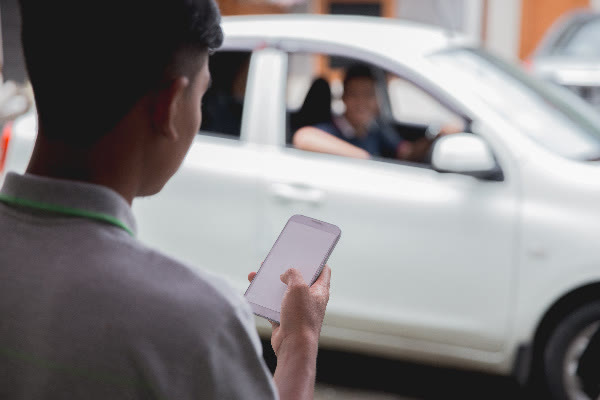
Do families who send their kids to college, paying increasingly stiff tuition, realize that most of the faculty at our universities are as precarious as Uber drivers?  

The present totally unbalanced higher ed teaching staff results largely from financial stress at our colleges and universities since the 1970s, especially as state support shrank. Seeking a way out, schools cut corners by hiring cheaper, less credentialed instructors. Over time, when budgets continued to dwindle, hiring adjuncts became the default, routine practice, in the long run generating a tiered workforce with contingent workers occupying an academic underclass. Some sectors—community colleges, for-profit universities and fully online colleges—are commonly run almost entirely by contingent labor.  

Precarious higher ed faculty represent the shock troops of the gig economy, with the latest U.S. Bureau of Labor Statistics data showing that freelancers or independent workers now make up 36% of the American labor force. Running at a slower rate than in higher ed, more than half of American workers are [expected](https://www.forbes.com/sites/nigelwilson/2023/02/08/taking-a-page-from-inclusive-capitalism-the-us-gig-economy-is-here-to-stay/) to enter gig employment in the next few years. 

Frank Donoghue in [_The Last Professor_](https://www.fordhampress.com/9780823279135/the-last-professors/)_,_ his book on the status of the profession, maintains, “In no other workforce is there such a wide disparity, both in income and in day-to-day life, between groups of people whose jobs, are in part at least, so similar.” 

Today, adjuncts are rising up, breaking the silence. Responding to their perilous situation, which has worsened in the wake of the pandemic and inflation, they’ve broken through with strikes and other union action. Adjunct and graduate student unions are out on picket lines, battling for better working conditions and higher pay. This year alone, contingent workers at twelve campuses went on strike, often winning serious [pay gains](https://www.edsurge.com/news/2023-06-16-why-colleges-should-pay-attention-to-strikes-by-their-most-precarious-teachers) and other concessions, mostly under the leadership of old assembly-line trade unions such as the United Auto Workers and United Steelworkers, who long ago recognized the plight of contingent faculty, years before academic professional organizations such as American Association of University Professors, American Federation of Teachers and the National Education Association, who protected only their own, highly compensated tenure-stream members. But in a recent turnabout, many of the gains adjuncts made came from joint efforts by adjunct and prominent academic unions.  

What’s been happening in higher ed over the last years, with contingent faculty taking over most college teaching, has become a cruel embarrassment, a structural deformity that continued budget hardship causes. Like an incurable disease, higher ed is stuck. It’s the way things are, a given, the academic air we breathe, so common few of us even notice. We are anesthetized.

Original URL: https://evolllution.com/the-uberfication-of-higher-ed

Are Colleges Ready For an Online-Education World Without OPMs?

For more than 15 years, a group of companies known as Online Program Management providers, or OPMs, have been helping colleges build online degree programs. And most of them have relied on an unusual arrangement — where the companies put up the financial backing to help colleges launch programs in exchange for a large portion of tuition revenue.

It’s a model that has long raised eyebrows in higher ed, and now it’s one that is under scrutiny from federal agencies. New regulations [under consideration in the U.S. Department of Education](https://www.insidehighered.com/news/tech-innovation/2023/12/13/how-education-department-could-change-opm-industry) could require OPMs to give up revenue-sharing and adopt the more conventional fee-for-service, subscription or other approaches instead.

As a longtime administrator of online programs at colleges, I have mixed feelings about the idea of shutting down the model. And the question boils down to this: Are colleges ready for a world without OPMs?

For one thing, the number of colleges that have worked with OPMs is large. It’s a $4 billion industry, with about 550 U.S. colleges partnering with them and about a quarter of students in fully online 4-year programs enrolled in them.

But it turns out, to my surprise, that it hasn’t been a very profitable model for the companies.

According to edtech consultant Phil Hill in [a recent blog post](https://onedtech.philhillaa.com/p/post-opm-rorschach-test), most revenue-sharing ventures have either lost money or barely reached breakeven. Leaders in the sector, including 2U, Coursera and Keypath, never made a profit on the activity, and Pearson and Wiley sold off their OPM offshoots in recent months when the going got rough.

It’s an OPM paradox — as companies lose money, colleges make it.

It turns out that these ventures often hoped to make money by growing large enough to be sold at a premium. A century ago, British economist John Maynard Keynes recognized that what matters most is not a company’s bottom line, but how the stock exchange rewards it.

When colleges turned to OPMs, they must have known it was dicey. Sharing half your tuition revenue with your provider is “outrageous,” a senior New York University faculty member, Thomas D’Aunno, grumbled years ago, just as he was signing up with an OPM against his better judgment.

“The question was which OPM we were going to work with,” he told me with resignation, “not whether we were going to work with one.”

## Outsourcing vs. Insourcing

When OPMs first infiltrated higher ed, convincing well-known colleges to outsource digital learning, I was among those who didn’t welcome them, fearing they’d do the job I thought more appropriate for faculty and college administrators to tackle.

OPMs, I worried, would undermine academic integrity in digital education. And even more troubling, I feared they would keep colleges from building higher ed skills needed to propel internal development over the long run.

My objection later softened, though, as I came to recognize that many colleges needed help to enter the digital marketplace. Since many lacked skillsets and resources to do what was required to move online forward, it made sense to turn to commercial vendors to give higher ed time to acquire digital ed know-how.

Once they got the hang of it, I hoped, colleges could then jump off their training wheels and go online entirely on their own.

That’s what happened recently at the University of Southern California when it [canceled its long-term contract with 2U](https://www.insidehighered.com/news/tech-innovation/teaching-learning/2023/11/09/2u-usc-sharply-curtail-much-scrutinized-online), a top, full-service provider. USC’s cancellation was just one turnabout in a cascade of dozens of colleges fleeing OPMs in recent years.

“2U had the technology and the means at first,” Pedro Noguera, dean of USC’s Rossier School of Education, told me recently. “But over the years, USC also gained the capacity to deliver high-quality online education. It’s an arrangement that outlived its purpose. Our faculty were doing all the work, and 2U was receiving more than its fair share, pocketing more than half of tuition revenue.”

As Clay Shirky, vice provost for AI and technology in education at NYU, told me: “A full-service OPM buys you a bundle of competencies. If you go with an OPM, you get less change at your own institution. If you do it yourself, you take the longer road, adapting to online learning.” Shirky also reminded me that “COVID gave faculty some sense of what online is about. When faculty gained experience, online was demystified.”

Colleges that depend on OPM investments to build, deliver and market remote programs won’t be very happy if proposed government rulings take effect, since it will require that they quickly come up with capital on their own. And these days, as everyone knows, colleges don’t have stacks of cash lying around. [According to Moody’s](https://www.highereddive.com/news/education-department-third-party-guidance-harm-colleges/649511/), “Institutions that have a significant number of online students and rely on OPM partners to deliver online services will likely be most affected by the proposed guidance.”

If OPMs go under, a deep gash will be felt in remote education. At their best, OPMs, operating in alliance with institutions like Georgia Tech, have helped lower tuition and increase enrollment markedly for high-quality online technical master’s. And OPMs opened wider possibilities for many institutions that lacked the courage or cash to go online on their own.

In partnership with hundreds of colleges, OPMs enrolled tens of thousands of working and other nontraditional students, many of whom might otherwise never have graduated with a prized degree.

## What’s in Store?

The OPM industry is pretty shaky now, with 2U so precarious, the U.S. government is worried it will go belly up soon, [leaving students stranded](https://www.highereddive.com/news/education-department-opms-2u-financial-distress/712428/?utm_source=Sailthru&utm_medium=email&utm_campaign=Issue:%202024-04-09%20Higher%20Ed%20Dive%20[issue:60875]&utm_term=Higher%20Ed%20Dive). Still, other top companies are doing quite well, with Coursera, Keypath and Academic Partnerships [reporting solid results](https://onedtech.philhillaa.com/p/coursera-market-insights-online-enrollments-opm-market).

To extend their reach and avoid being saddled with a single line of business that might not pan out, most big OPMs have become diversified, running a mix of product lines. Coursera, [for example](https://www.classcentral.com/report/coursera-q4-2023/), with its jaw-dropping, worldwide base of 142 million learners largely in its library of online offerings, offers hundreds of corporate and government online training courses as well as dozens of non-credit professional certificates.

But it’s unclear whether OPMs can continue with their degree-granting business without revenue-sharing arrangements.

If OPMs go away in universities, there’s a chance they may no longer be crucial at some colleges and universities, especially when every tuition dollar stays on campus. Following the USC example, many may already be poised to carry on on their own.

And there’s even the remotest possibility they won’t be forced to go away at all. The Education Department may yet bow to academic opposition, and in a longshot, forego its proposed rules to put OPMs out of business at the nation’s universities.

Still, it looks like OPMs are not sitting around, waiting for the axe to fall. To escape proposed government regulations that may ban revenue sharing, some vendors are already offering flat fees and other payment options. Colleges aren’t sitting idly by either, with some setting up internal online teams, skipping OPMs altogether.

Original URL: https://www.edsurge.com/news/2024-04-22-are-colleges-ready-for-an-online-education-world-without-opms

Do Online College Experts Have a Seat at the Strategy Table?

Published on Feb 27, 2024

I’ve been thinking lately about the extent to which leaders with online experience serve on the very top of higher ed councils, sitting at the same table as presidents and provosts, participating in high-level discussions of present and future strategies. With online enrollments now occupying a third of higher ed college students and with 50% of students or more taking at least one online course, it seems only prudent to invite seriously knowledgeable online academics and administrators to serve at the highest levels of current and long-range college thinking. With online enrollment on its way to being equal with on-campus enrollment, it’s not only a wise move but likely one that will redirect the university from continuing to act as if its principal mission is to meet the requirements of on-campus students only.

But are online experts invited to join other senior college officials at crucial strategy sessions? Are they seated with other members of the president’s cabinet? I reached out to several astute observers to learn what they think. Their insightful responses confirmed what I had long suspected. 

At most institutions, in addition to the president and the chief academic officer, you may find a chief financial officer as well as the general counsel and, at large universities, deans of various academic schools. Sometimes, you’ll also find specialists in student recruitment, research, fundraising and other key competencies that help run today’s complex academic enterprises. In responding to new challenges, seats may now even be occupied by unexpected specialists in AI, crisis management and student protests, among other hot-button issues. 

“People who are sophisticated about online learning are unlikely at the seat of power,” says Mike Goldstein, Managing Director at Tyton Partners, an education strategy and investment banking firm. “At most institutions, online learning is separate, as far from the seat of power as the parking lot.”  

Richard Garrett, Chief Research Officer at the higher ed consulting firm Eduventures, agrees, “Typically, online leaders are not seated at the table in the university’s cabinet.” Garrett says that online learning is not commonly integrated with the rest of the university. “Its leaders are not especially close to senior officers, who may have captured their attention but whose knowledge of digital education is often limited and their understanding vague.”

Phil Hill, Consultant and Market Analyst at Phil Hill & Associates, is more positive, recognizing that college leaders are now more willing, especially in the present enrollment crunch, to consult with their own more sober online experts. For a time, Hill recalls, presidents were often dazzled by digital learning promoters promising big bucks without big investments.

“In making serious decisions, online experts were not often brought to the table,” Hill reminds us. “No one is promising pipe dreams anymore. Now presidents are looking for solutions that really work. They are willing to listen to the good and the bad, that it will take time and cost you something.”

According to Eric Fredericksen, Associate Vice-President for Online Learning at the University of Rochester, chief online officers at the nation’s colleges don’t commonly join cabinet sessions but are woven into each institution’s academic fabric, with more than half [reporting](https://nam10.safelinks.protection.outlook.com/?url=https%3A%2F%2Fwww.doi.org%2F10.24059%2Folj&data=05%7C02%7Cscox%40evolllution.com%7Cc767663470ec45edc50208dc191388b3%7Ce6fe6e385ad94252a59a231e8149caf7%7C0%7C0%7C638412818916461263%7CUnknown%7CTWFpbGZsb3d8eyJWIjoiMC4wLjAwMDAiLCJQIjoiV2luMzIiLCJBTiI6Ik1haWwiLCJXVCI6Mn0%3D%7C3000%7C%7C%7C&sdata=QXRfwfRVsF%2FAZvVJlciTbL09dYnXSdgxfra%2BG19vMlE%3D&reserved=0) to the provost.

Looking ahead, it’s unlikely online leaders will find themselves headhunted for senior cabinet posts anytime soon. “When I think about the complexity of the presidential role, there are so many big items—fundraising, crisis management, student protests, revenue generation,” observed Ruth Shoemaker Wood, Managing Director at Storbeck Search. “But colleges are not quite ready to make the leap that online is critical.”

“It’s clearly a moving target,” says Richard Ekman, President Emeritus of the Council of Independent Colleges. “Everyone in higher education is becoming more cognizant about the need for online learning.” Ekman, who participates in many top recruitment searches, said, “I have not seen online come up yet.” 

Just as in dysfunctional families, not everyone is invited to the party. At highly polished conference tables, a few steps from the president’s office, not everyone who matters is present. As Rochester’s Fredericksen tells us, merely 5% of online officers [report](https://nam10.safelinks.protection.outlook.com/?url=https%3A%2F%2Fwww.doi.org%2F10.24059%2Folj&data=05%7C02%7Cscox%40evolllution.com%7Cc767663470ec45edc50208dc191388b3%7Ce6fe6e385ad94252a59a231e8149caf7%7C0%7C0%7C638412818916468234%7CUnknown%7CTWFpbGZsb3d8eyJWIjoiMC4wLjAwMDAiLCJQIjoiV2luMzIiLCJBTiI6Ik1haWwiLCJXVCI6Mn0%3D%7C3000%7C%7C%7C&sdata=d3ec3ur1xI0d%2FHFXmf6Utl%2BfFz6H5eGUjBAzEYgfAII%3D&reserved=0) directly to the president.

When the most powerful exclude online, they not only arrest its growth but undermine the wider influence of online theory and practice in on-campus teaching and learning. If there’s no one at the top to champion digital education, who will guide classroom faculty to introduce active learning, peer-to-peer instruction, project-based teaching and other progressive innovations? Who will steer higher ed to welcome working students, adult learners and other unconventional students? 

With digital education among the most pressing questions facing higher ed, the lack of remote learning intelligence informing our senior academic leaders is an embarrassment. Universities are credited with being at the heart of the nation’s intellectual life, but—when faced with examining their own vexing questions—they fail to give those with most experience and insight their rightful place at the table. Until higher ed sets a place for our online leaders at the table where pivotal decisions are debated, remote education will remain a scandalously unresolved open question.

Original URL: https://evolllution.com/do-online-college-experts-have-a-seat-at-the-strategy-table

Online Teaching Is Improving In-Person Instruction on Campus

Since the earliest days of colleges experimenting with teaching over the internet, the goal has been to replicate as closely as possible the physical classroom experience. After all, in-person was seen as the gold standard, and the question was whether that could be faithfully reproduced online.

But since the COVID-19 pandemic forced instructors around the world to try online education, something unexpected has happened: Professors have found that there are some online teaching methods that work better than what can be done in the limits of a physical classroom. And now that campuses are back from pandemic restrictions, many instructors are trying to incorporate those remote practices into their in-person teaching.

Actually, the phenomenon predates the pandemic. Even back in 2001, an [in-depth study](https://urresearch.rochester.edu/fileDownloadForInstitutionalItem.action?itemId=2499&itemFileId=3448) of an online-education effort at the State University of New York reported that most faculty who taught remotely found the techniques they discovered online positively impacted their campus instruction when they returned to the classroom. In fact a slew of research over the past two decades has found that teaching online makes professors better teachers in their classrooms, so much so that [one 2009 study](https://files.eric.ed.gov/fulltext/EJ862351.pdf) recommended that “faculty should be trained in distance education methods and technologies and should be encouraged to use those methods back in the classroom.”

It’s a message [I’ve been arguing](https://www.insidehighered.com/digital-learning/views/2017/03/22/end-war-between-online-and-campus-instruction#) for a while. But now that so many educators and students have had direct experience with online formats, it’s a narrative that seems to be sinking in.

Now is the time to fully embrace how physical classrooms can be improved by online techniques.

## Making Learning Active

Students, in particular, seem sold on the upsides of techniques they encountered during online learning. A recent Titan Partners [survey](https://www.insidehighered.com/news/tech-innovation/teaching-learning/2023/06/21/student-and-faculty-perspectives-digital-learning) found that students are eager to participate in on-campus courses with digitally embedded exercises. Students greatly favored hybrid options, and they preferred digital course materials over print textbooks.

“The online experience has changed student expectations, especially of time spent in class,” says Whitney Kilgore, chief academic officer at iDesign, a higher education service provider specializing in instructional design. “Many are busy adults who don’t want their time wasted.”

After teaching online in the pandemic, many savvy faculty members have recognized that students like the option of being able to watch a video of a lecture if they missed it — or if they just wanted to rewatch sections to review. And that has led more professors to experiment with [flipped classrooms](https://www.edsurge.com/news/2023-02-16-does-flipped-learning-work-a-new-analysis-dives-into-the-research), where they can record short lecture videos that they ask students to watch as homework, leaving more class time for more active learning such as working in groups.

My own experience teaching at The New School, a small Manhattan college, supports this style of instruction. Each week, I’d assign several lectures I’d recorded earlier on video. Then, in real time, students and I would engage in extended discussions of the themes I’d covered in my recordings. None of our class time was given to me delivering lectures.

When professors teaching face-to-face adopt online pedagogy, the classroom is transformed into a “blended” experience, moving from conventional to active learning. And that helps students turn from passive to engaged participants in their own intellectual excursions.

Other industries have experienced similar histories as new technologies rolled in. Just think back to the fierce battles between movies and television in the 1950s, when Hollywood worried that TV would put it out of business. Today’s streaming services have led to an unexpected blurring between movies and television, and there’s less concern about which medium is more authentic or “better.”

These days, attitudes are similarly shifting when it comes to teaching.

“Face-to-face instruction is no longer the gold standard,” says Steven Goss, chair of Management and Technology in the business programs at New York University’s School of Professional Studies, where he teaches blended courses. “Faculty who say, ‘I only teach on campus,’ are doing themselves a disservice. Teachers who aren’t thinking about the variety of ways there are to teach aren’t thinking about their full capacity.”

Original URL: https://www.edsurge.com/news/2024-02-14-how-online-teaching-unexpectedly-improves-in-person-instruction-on-campus

Students Know What They’re Looking for Online. Are Colleges Delivering What They Want?

Most of us know what to expect in a face-to-face classroom: Students sitting in rows, facing instructors and listening to lectures, watching videos displayed on screens up front, or, in smaller classes, participating in lively discussion. Altogether, a modest set of conventional choices we’re all familiar with as students and faculty on campus.

But in the last couple of decades, since the introduction of online instruction in higher ed, students now expect a much wider range of options — a collection of novel approaches, inconceivable before the digital revolution, including participating online in breakout rooms, joining online study groups, watching recordings of class sessions posted later for study and reflection, [and more](https://www.mckinsey.com/industries/education/our-insights/how-technology-is-shaping-learning-in-higher-education).

But are colleges paying attention to what online students want most? Are virtual classes delivering what they expect?

These days senior college leaders should be eager to find out, as enrollment overall is falling even while interest in online courses is on the rise. A recent analysis of federal government data by Jeff Seaman of Bay View Analytics shows that enrollment in on-campus courses fell nearly 11 percent in the past decade and almost 30 percent from 2020 to 2021. In contrast, enrollment in online courses shot up from nearly 34 percent over the 10-year period and leaped 110 percent in the first years of the pandemic.

![](https://edsurge.imgix.net/uploads/photo/image/10379/chart_for_what_students_want_online-1695234082.png?w=1080&h=540&auto=compress,format&fit=fill&bg=fff&pad=null&blur=10&px=4)

Source: Bay View Analytics

So do we know about what these students value most?

[Surveys of remote college students](https://www.mckinsey.com/industries/public-sector/our-insights/what-do-higher-education-students-want-from-online-learning) show that their top priorities are convenience and flexibility. After all, [about 70 percent of online students work](https://www.edsurge.com/news/2022-10-19-do-online-degrees-lead-to-jobs-as-reliably-as-traditional-ones), while in the wider college population, only [about 40 percent are employed](https://nces.ed.gov/programs/coe/indicator/ssa/college-student-employmenhttps).

Many depend on accessing course resources and lessons seamlessly from online textbooks or other digital resources. [Others](https://www.mckinsey.com/industries/education/our-insights/how-technology-is-shaping-learning-in-higher-education) find it enriching to participate in online chat and polling. Those who live in remote areas of the U.S. or in disadvantaged countries abroad that lack robust broadband options [depend on mobile devices](https://link.springer.com/article/10.1007/s11528-021-00587-8) to participate online.

Remote students also want the kind of services their on-campus peers get — robust academic and technical support, job-ready curricula and links to employers. And just like those on campus, they’re eager to win scholarships and receive financial support.

Many students expect their online courses to be completely on-demand (what’s known as asynchronous), so that they can tune in as they carve out time between jobs and other life responsibilities. A [survey of online students](https://universityservices.wiley.com/wp-content/uploads/2022/09/202209-VOL2022-report-WUNI_Final_Update.pdf) conducted by Wiley found that 69 percent preferred asynchronous classes in fully online programs, with no requirement to visit a campus.

But a different survey of students published in [Frontiers of Education](https://www.frontiersin.org/articles/10.3389/feduc.2021.647986/full) concluded that college students prefer real-time interaction online (known as synchronous instruction) such as showing up on Zoom to a class held at a specific day and time together with other classmates. The sharp difference in results comes from whose opinion counted. This survey asked a broader group of students, while the Wiley study quizzed those in online programs only.

It turns out, luckily for online students, that the most common type of remote instruction for undergraduates is asynchronous, according to the [CHLOE report from Quality Matters](https://qualitymatters.org/sites/default/files/research-docs-pdfs/QM-Eduventures-CHLOE-8-Report-2023.pdf?token=7i6g2U_Hp_p6V8ogvd3uV-TzkpPN6A_mKgvLxNE_1ls) of chief online learning officers — a result that came as a surprise to me, since most faculty members prefer [in-person teaching](https://www.insidehighered.com/news/tech-innovation/teaching-learning/2023/08/25/report-majority-faculty-prefers-person-teaching#). For years, it’s been a struggle for many college faculty to adapt to online instruction. Even though Zoom and other video conferencing systems have opened classrooms to remote students, the habit of delivering lectures in real time is hard to break, and that doesn’t translate as well online.

If you’re looking to uncover whether colleges and universities are delivering what remote students want, the recent Quality Matters report offers insights with mixed signals. With only about 40 percent of online officers saying their institutions are fully ready to give it all they’ve got, it suggests that higher ed is only moderately prepared to deliver the digital bells and whistles remote students are looking for. An almost equal fraction of online officers hesitate, saying that their colleges need time to do the right thing.

For centuries, higher ed was the province of scholars, with faculty determining the scope and nature of what constitutes knowledge, what students learn and how they learn it. In the digital age, faculty no longer occupy the seat of authority alone, but must share it with their students.

If colleges are serious about attracting new streams of online learners to solve their enrollment challenges, leaders must move full speed ahead with online options and support.

Original URL: https://www.edsurge.com/news/2023-09-21-students-know-what-they-re-looking-for-online-are-colleges-delivering-what-they-want