LATEST ARTICLES

Can MOOCs Cure the Tuition Epidemic?

[

![This is part of a series on MOOC and online learning](https://spectrum.ieee.org/media-library/this-is-part-of-a-series-on-mooc-and-online-learning.png?id=25582281&width=980)

](https://spectrum.ieee.org/tag/moocs)

In the [United States](https://spectrum.ieee.org/tag/united-states), the biggest obstacle standing in the way of students going to college is not their high-school grades or their test scores. It’s cash. For low-income applicants especially, soaring tuition is one of the main reasons that [as many as 40 percent](https://hechingerreport.org/why-are-low-income-students-not-showing-up-to-college-even-though-they-have-been-accepted/) of those accepted in the spring don’t show up in the fall. According to the College Board, for the 2016-17 school year, [average tuition and fees](https://trends.collegeboard.org/college-pricing/figures-tables/tuition-fees-room-and-board-over-time) are about US $33,500 at private colleges, $9,650 for state residents at public colleges, and $25,000 for out-of-state residents. To these charges, add about $10,000 a year for room and board. In general, tuition has been rising far faster than the cost of living. Going to college can be like buying a new Mercedes every year.

How did this affliction invade our universities? While there are many causes, two factors account for much of it. For public schools, the answer is simple: State legislatures have savaged higher education over the last decade. Previously, up to two-thirds of a state college’s budget came from the state; now only about half of the budget does. Students and their families pick up [much of the difference](https://www.cbpp.org/research/recent-deep-state-higher-education-cuts-may-harm-students-and-the-economy-for-years-to-come).

When the first [MOOCs](https://spectrum.ieee.org/tag/moocs) appeared, they seemed like the answer to a prayer

The bloating of academic bureaucracy is another cause. While the number of new students and faculty hasn’t grown much, non-academic staff at colleges and universities has ballooned—more than doubling in a generation. What’s more, compensation for administrators is often far higher than faculty pay.

One painful result of the tuition [epidemic](https://spectrum.ieee.org/tag/epidemic) is that U.S. student debt is now at an all-time peak of more than a trillion dollars. According to the Project on Student Debt, the average college student graduating in 2015 [carried debt of about $30,000](https://ticas.org/sites/default/files/pub_files/classof2015.pdf) \[PDF\]; in 2004, the average was a more manageable [$18,550](https://ticas.org/sites/default/files/pdf/classof2014_embargoed.pdf).

Under stress, most schools have opted for cost-cutting. Perhaps most troubling, they have replaced full-time tenured faculty with cheaper adjuncts. [According to a 2013 report](https://www.agb.org/trusteeship/2013/5/changing-academic-workforce), full-time tenured and tenure-track positions at U.S. universities fell from 78 percent of teaching staff in 1969 to just 33 percent in 2009. Over the same period, the share of non-tenured positions in the teaching staff more than tripled. On average, adjuncts earn just a third of what tenured faculty make and have no job security and few benefits; in a sense, they were the bellwethers of the gig economy.

Despite these and other cuts, tuitions continued to climb. So when the first MOOCs—massive open online courses—appeared on the scene, they seemed like the answer to a prayer. As described in [my previous post](https://spectrum.ieee.org/tech-talk/at-work/education/how-the-pioneers-of-the-mooc-got-it-wrong), MOOCs made it possible to reach many thousands of students at a time, so long as they had a computer and a robust [Internet](https://spectrum.ieee.org/tag/internet) connection capable of (https://spectrum.ieee.org/tag/video-streaming). [Sebastian Thrun](https://spectrum.ieee.org/tag/sebastian-thrun), a [MOOC](https://spectrum.ieee.org/tag/mooc) pioneer, famously suggested that [the technology would so disrupt education](https://www.wired.com/2012/03/ff_aiclass/) that in 50 years, only 10 institutions of higher learning would remain.

A number of established schools soon began experimenting with MOOCs, and four of them—Georgia Tech, the University of Illinois, the Arizona State University, and MIT—now offer degrees based on MOOCs. Introducing the MOOC model, they discovered, required significant up-front investment. [Georgia Tech](https://spectrum.ieee.org/tag/georgia-tech) reportedly spent [$200,000 to $300,000 for each virtual course](https://www.wsj.com/articles/SB10001424127887324031404578483670125295836) in its MOOC-based master’s degree program in computer science. The courses were built in partnership with MOOC provider [Udacity](https://www.udacity.com/), with AT&T kicking in a total of $3.9 million to help launch them.

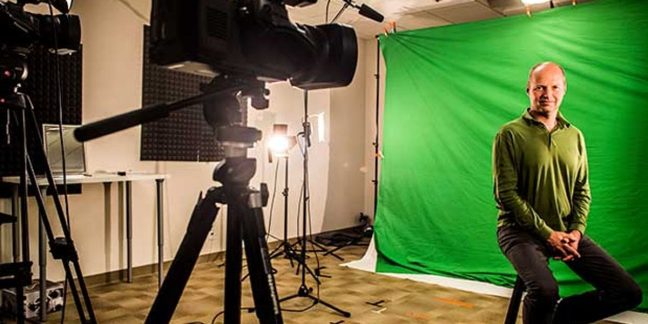
What accounts for MOOCs’ high startup costs? Unlike traditional classroom instruction, producing a MOOC involves not just an instructor, but also videographers, instructional designers, simulation experts, and multimedia specialists, who must prepare videos, interactive presentations, and online quizzes, among other digital content. Like automobile manufacturing, MOOCs thrive on economies of scale. If it costs $300,000 to create a MOOC in which 10,000 students enroll, the cost per student falls to a trivial $30.

Incoming Arizona State University freshmen can take 10 first-year courses online for $6,000

Nelson Baker, Georgia Tech’s dean of professional education, told me that scale allows the school to offer its digital degree for far less than what it charges residential students. There are about 4,000 students enrolled in the school’s MOOC-based computer science master’s, compared to the on-campus cohort of 300. Georgia residents pay about $20,000 per year for the on-campus degree program, with out-of-state tuition nearly double that. Tuition for MOOC students is [just $7,000 per year](https://www.insidehighered.com/news/2016/04/27/georgia-tech-plans-next-steps-online-masters-degree-computer-science).

(For comparison’s sake, the cost of creating a new online course at my school, [NYU Tandon School of Engineering](https://engineering.nyu.edu/), is about $60,000 to $70,000, not counting faculty compensation. One possible reason for the lower startup cost is that we build our online courses in-house rather than relying on commercial vendors. That said, [NYU](https://spectrum.ieee.org/tag/nyu) charges the same tuition for an online degree as for one earned on campus. Since our online courses are not MOOCs, the school does not benefit from economies of scale. But students benefit from the small class sizes, offering personal attention in an active-learning environment.)

Launched in 2014, Georgia Tech’s MOOC-style master’s was the nation’s first. Just this month it announced a [second MOOC-based master’s, in data analytics](https://www.news.gatech.edu/2017/01/11/online-master-science-analytics-degree-be-offered-less-10000). Several other schools have followed Georgia Tech’s lead. At the University of Illinois, for example, tuition for the residential Executive [MBA](https://spectrum.ieee.org/tag/mba) is $97,000. But [Illinois’ online iMBA](https://onlinemba.illinois.edu/), developed in an alliance with [Coursera](https://www.coursera.org/university-programs/imba/), one of the principal MOOC companies, is a bargain basement $22,000.

In 2015 [MIT](https://spectrum.ieee.org/tag/mit) collaborated with [edX](https://www.edx.org/), a nonprofit MOOC joint venture between MIT and [Harvard](https://spectrum.ieee.org/tag/harvard), to offer what it calls a “[MicroMasters](https://www.washingtonpost.com/news/grade-point/wp/2015/10/07/mit-floats-a-new-online-credential-the-micromasters/?utm_term=.83d0735ae0a7).” This new credential gives students who pass five graduate-level MOOC courses plus a proctored final exam the chance to apply for an accelerated, on-campus master’s that is about one-third less expensive than its on-campus equivalent. MIT’s first MicroMasters is in [supply chain](https://spectrum.ieee.org/tag/supply-chain) management. While a student completing the master’s program entirely on campus would pay $67,000, someone who did the MicroMasters and then the residential program would pay just $45,000. MIT has since rolled out a second MicroMasters, in data, economics, and development policy, and [13 other universities have joined them](https://www.edx.org/micromasters).

Ultimately the tuition epidemic is a symptom of a serious problem that MOOCs probably can’t solve

Meanwhile, Arizona State has been experimenting with [MOOC courses for undergraduates](https://www.insidehighered.com/news/2015/04/23/arizona-state-edx-team-offer-freshman-year-online-through-moocs). Its [Global Freshman Academy](https://www.edx.org/gfa) offers MOOCs through edX at $600 a course. Incoming freshmen can take all ten of these first-year courses online for $6,000, earning university credit in the process. By contrast, out-of-state and international students enrolled on campus pay more than twice that. But the Global Freshman Academy has greater ambitions than just tuition reduction. Because students do not pay for each online course until after they pass it, the Academy claims that it is “[one of the lowest-risk ways for students to start their college careers](https://www.edsurge.com/news/2016-05-27-how-to-set-up-students-to-succeed-in-online-learning),” according to Adrian Sannier, a professor at Arizona State.

It’s still early days for MOOC-based degrees and much too soon to say whether these tuition-reduction experiments will have a lasting effect. Ultimately, though, the tuition epidemic is a symptom of a larger and far more serious problem that MOOCs probably can’t solve. Rather than treating a college education as an essential element of civil society, we have thrown higher learning into the merciless pit of the marketplace. These days, rather than expecting our state and federal governments to fully support colleges and universities, we force students and their families to shoulder an increasingly unsustainable burden.

This is a sea-change in the structure of higher education over the past half century. When I enrolled at Brooklyn College in the late 1950s, I paid no tuition. In post-war America, college was considered a citizen’s right—not a commodity to be purchased, online or otherwise.

Even as schools continue to search for ways to reduce tuition, through MOOCs or other means, the answer may come from outside of academia. Recently, Rhode Island Governor Gina Raimondo proposed giving residents [two years of free tuition at the state’s public colleges](https://www.providencejournal.com/news/20170115/ri-students-to-get-free-tuition-for-2-years-at-state-colleges-under-raimondo-budget–poll). And New York’s governor, [Andrew Cuomo](https://spectrum.ieee.org/tag/andrew-cuomo), has offered to [waive tuition for any state resident accepted at a state or city university](https://www.ny.gov/programs/tuition-free-degree-program-excelsior-scholarship), provided their family income is $125,000 or less. If there’s a cure for the tuition epidemic, such progressive moves seem far more promising than simply leaving it in the hands of colleges and universities.

_About the Author:_

_Robert Ubell is vice dean emeritus of [online learning](https://spectrum.ieee.org/tag/online-learning) at [NYU’s Tandon School of Engineering](https://engineering.nyu.edu/)__. A collection of his essays on digital education_, [Going Online: Perspectives on Digital Learning](https://www.routledge.com/Going-Online-Perspectives-on-Digital-Learning/Ubell/p/book/9781138025325)_, was recently published by Routledge. He can be reached at [bobubell@gmail.com](mailto:bobubell@gmail.com)__. This is the second in a [series on MOOCs and online learning](https://spectrum.ieee.org/tag/moocs)._

Original URL: https://spectrum.ieee.org/tech-talk/at-work/education/can-moocs-cure-the-tuition-epidemic

Why Faculty Still Don’t Want to Teach Online

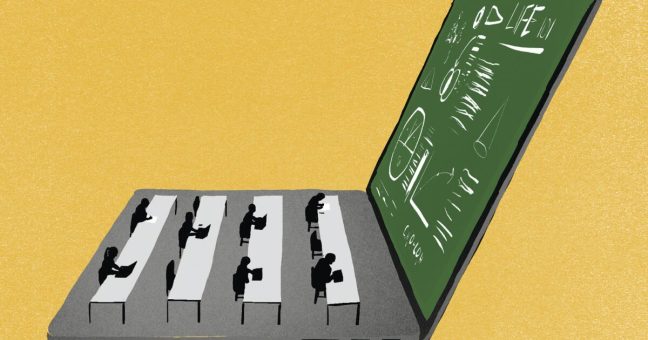
At nearly all colleges and universities, online education is almost never mentioned in academic rules that judge faculty members and determine if they advance. If you teach online, you may do it for extra compensation — called “overload,” pay above your basic salary — or for the personal satisfaction of participating in what some believe is the next stage in the evolution of higher education. But teaching online may not be a wise move to further your academic career.

Teaching online can even be a dangerous career move, departing from the comfortable respectability of conventional classrooms for the exotic, suspicious digital world. In the hierarchy of status, if you teach online, do you compromise your position? Will your commitment to scholarship be questioned? Why would you go online when your future depends on publishing results of your research, not engaging in virtual instruction?

In fact, academic departments at some colleges and universities even strongly discourage young faculty from teaching online. It’s considered a distraction from your career objectives, while teaching on campus is not only viewed as part of a commitment to a full professional life but also required as the first step in climbing the academic hierarchy. Quality on-campus teaching may contribute to your rise in the ranks but rarely, if ever, does online instruction.

For the most part, that’s because many faculty members still don’t have a very high opinion of online education. According to [research](https://drive.google.com/file/d/0B8dpvHFc4j9YcWtlbVV6aWcxaGc/view) conducted by my colleague John Vivolo, director of online and virtual learning at New York University’s Tandon School of Engineering, about why some faculty members are reluctant to teach online, more than half of Tandon faculty members surveyed believe that virtual instruction offers little interaction with and among students. On the whole, they think the quality of online courses is not as good as on-campus ones.

Most studies of faculty attitudes confirm those findings, especially the belief that online content is inferior. A 2012 [comprehensive literature survey](http://jolt.merlot.org/vol8no1/lloyd_0312.pdf) by Steven A. Lloyd, Michelle M. Byrne and Tami S. McCoy concluded that most professors believe digital education is not nearly as effective as classroom instruction because virtual instructors do not exchange visual cues with students.

Not surprisingly, the data showed that older and higher-ranking faculty members exhibit the least support for online education. The literature survey also uncovered the troubling fact that professors with the deepest resistance are those with the least familiarity with digital instruction. Conversely, the more faculty members know about online education, the less they reject it. But since most faculty members have little or no experience with virtual education, resistance is widespread.

In a number of other studies, faculty members also express serious concerns about the lack of institutional commitment — chief among them poor technical and pedagogical support. At some colleges and universities, faculty members are given an access code to their online class and sent into virtual space entirely without preparation. Faculty members who teach online also say they are inadequately compensated for the time it takes to migrate courses from on-campus classrooms to online ones. Moreover, they worry about institutional ownership of their intellectual property, as they often can’t take the virtual course that they developed at one higher education institution to another.

Finally, one of the largest roadblocks to pursuing online teaching is faculty fear of losing control. Except in rare cases of team teaching, faculty members enter classrooms on the campus entirely on their own. They prepare their syllabi, devise slides and hand out assignments all by themselves. What they teach and how they teach it is almost totally in their hands. What happens in the classroom is under their authority. But online, the autonomy of the instructor is threatened. Because digital instruction requires technical and pedagogical support from sophisticated videographers, instructional designers and other personnel, faculty join as members of a pedagogical team rather than operating as autonomous instructors. Anything might happen.

The case against online education is not, in fact, without merit. In the hands of underfunded and poorly managed public and private institutions, online learning often delivers mediocre education at best. If those failures represent the sum of online education, then faculty members who reject it have every reason not only to be suspicious of it but also to discredit it.

**Disruption**

That said, online education is here to stay and will probably significantly proliferate in the coming months and years. Dogged by falling enrollments, rising tuition and unsupportable student debt, colleges and universities are under pressure to find new ways to dig themselves out of their economic troubles. For many institutions, online education looks like a good candidate to reverse those intractable trends. Trustees and state Legislatures imagine that digital learning is not only an agent of change but also offers the potential to lower costs and increase enrollment.

For colleges and universities with limited resources, digital classes can deliver enormous benefits. Online courses require relatively few resources — merely faculty members and students in virtual space. Other than compensating online instructors and installing technical infrastructure, nearly all other expenses — apart from websites, recruitment and managing student applications and acceptance — fall away. Compared with the enormous sums needed to run a giant campus, launching classes online is trivial.

Thus, new online programs are expanding rapidly, and colleges and universities must populate digital courses with reluctant faculty members. At many institutions, professors are under pressure to adapt, to acquiesce to university demands to teach online.

Moreover, as digital education enters the mainstream, more online and on-campus professors are offering courses in conventional classrooms to residential students and delivering the same class in virtual space to distance learners at the same university during the same semester. The division between online and on campus is rapidly disappearing, and, at some institutions, technology has penetrated the classroom so deeply that the distinction will soon be obsolete.

Meanwhile, the fact is that solid research over many years has failed to support the overwhelming negative attitudes that most faculty members hold toward virtual learning. Studies that have investigated effectiveness, retention and achievement by and large concluded that virtual instruction can be as good, or better, than on-campus teaching. Indeed, a massive U.S. Department of Education [review of the literature](http://eric.ed.gov/?id=eD505824) showed that students taking online classes performed modestly better than their peers studying on campus.

Results of online graduate programs at NYU Tandon School of Engineering confirm the clear benefits of virtual education. Online student data at the school often show superior outcomes when compared with the nation’s [on-campus science and engineering master’s students](http://cgsnet.org/masters-completion-project), with 96 percent of the school’s online students completing their online courses and 89 percent of online master’s students earning their graduate degrees in three years. And when comparing students’ grades online with on-campus classes, they are startlingly the same, semester after semester.

In response to such emerging evidence, growing numbers of formerly resistant professors at colleges and universities across the country are coming around to online education. At a small technical school in New Jersey, a serious scholar — revered for the depth of his research achievements and who for many years was among the most opposed to virtual education — made an about-face. He not only accepted online instruction, but he emerged as a champion of it. Soon after his conversion, faculty resistance at the institution began to crumble. Introduction of new converts accelerated, climbing higher and higher, until nearly all faculty became believers. In the end, 90 percent of the faculty members were teaching online.

These and other faculty members have realized that the battle should not be fought between brick-and-mortar and new digital space but between old and new ways of teaching — those that encourage more interaction among students and instructors.

**False Dichotomy**

Recognition is growing in academe that the best on-campus faculty members are best online, too. Online faculty must be as generous as those on campus with their students — devoted to students and their success and giving serious thought to devising compelling ways to teach. To be an exemplary teacher, in either virtual or physical space, you must enter the minds of your students, recognizing the struggle each confronts, remembering your own trials as a student. The best professors commonly love what they do and often love their students, eager to do what’s best for them — no different online than on campuses. Cynical ones who disparage their students are not cut out for it, whether they teach virtually or in the classroom.

Indeed, online technology demands far greater instructional insights. If you go online, the effort to rethink how you will present your content and reassemble your syllabus requires serious commitment, especially if you must now become a student yourself to learn how to be proficient at navigating software — a skill that requires you to be adept at things that may come more naturally to your students. You must enter the virtual classroom sympathetically, recognizing that virtual space requires the professor to be accommodating with remote students who may find the online environment alienating at first. You must find innovate ways to engage students whom you can neither see nor hear.

“Migrating a course from lecture to active learning format is as much work as developing a brand new course,” notes Ryan Craig in _Wired_ (Craig, 2014). Most of us might conclude that online education merely requires that colleges and universities replicate the physical classroom in digital space. It turns out, however, that online learning is not simply the result of introducing technical means to migrate the campus experience online. Going online is like moving to a foreign country, where you must learn a new language and assimilate a new culture.

To gain insights into what online learning is all about, a good first step would be to contact your institution’s online learning unit. Chances are they’ll be delighted to take you on a virtual tour of how an online class works, especially how instructors encourage peer-to-peer interaction and teamwork. Probably the easiest and best way to get a feel for it is to go online yourself and take an online class in a field that intrigues you. You can enroll in a massive open online college course at [Coursera](https://www.coursera.org/) or [edX](https://www.edx.org/) or take a how-to class at [Khan Academy](https://www.khanacademy.org/). For young faculty, overcoming prejudices against online instruction in your department is tougher. It may require that you propose online courses as a good way to reach out to disabled and other students unable to come to campus. Once people see the benefits, their resistance to it may fade and support may grow, as in the case of the technical college in New Jersey that I described.

The strengths of online education emerge from new conceptual approaches in teaching and learning. In dismissing it for its dependence on technology, opponents overlook crucial elements that make digital education transformative — an entirely new way of teaching with new methods of engaging students. In the long run, neither the guardians of the campus nor the champions of the digital revolution will claim victory. Already, the educational battleground is populated by faculty members who accept that neither physical nor virtual education will triumph but rather the best pedagogical practices that support active student learning.

Original URL: https://www.insidehighered.com/advice/2016/12/13/advice-faculty-members-about-overcoming-resistance-teaching-online-essay